
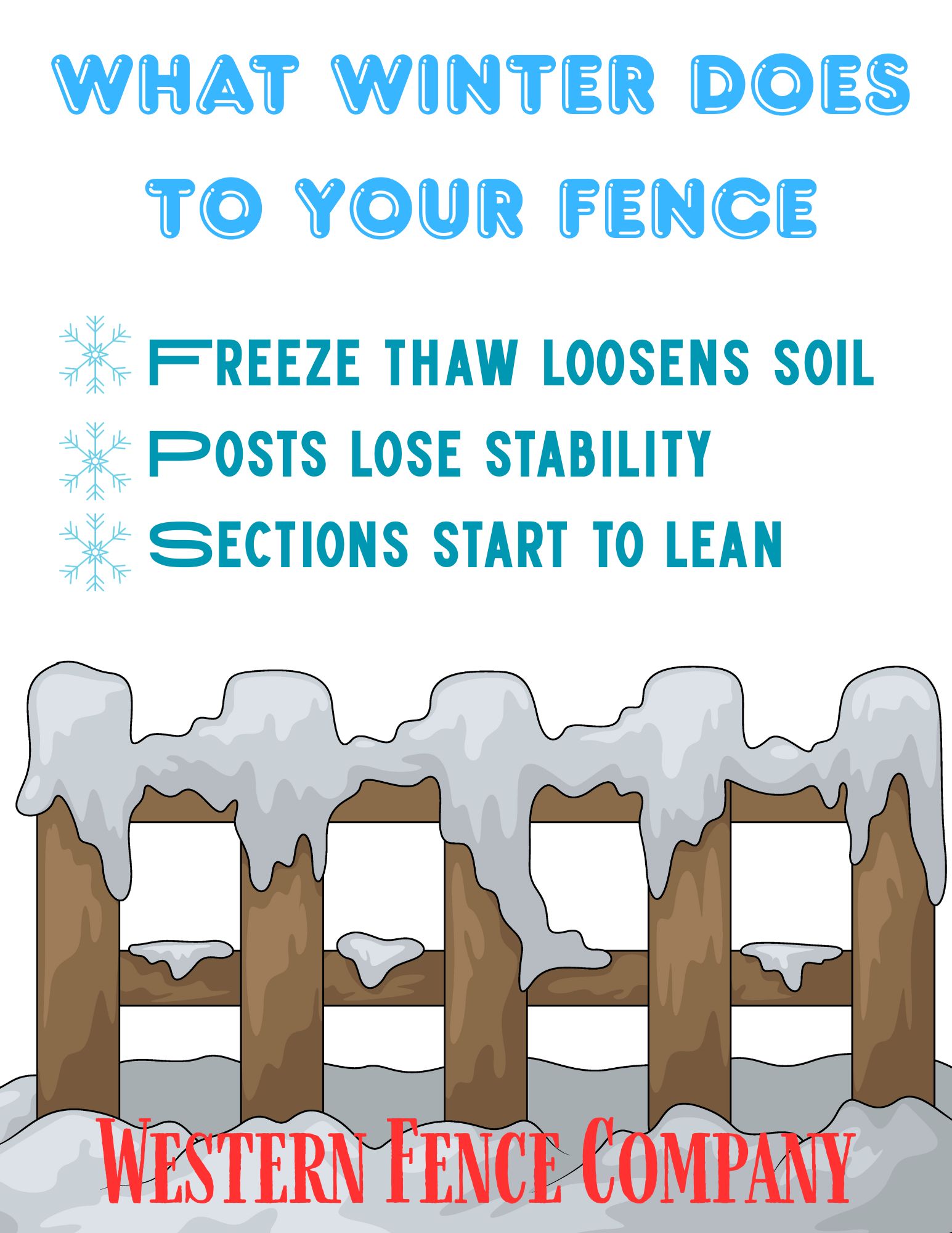
Why Fence Posts Fail After Freeze Thaw Cycles
Utah winters are tough on fences, especially the posts that hold everything together. While most homeowners focus on boards and rails, the real damage often happens underground where it is easy to miss and expensive to ignore.
From Wasatch Front snow loads to rapid spring thaws, Utah’s climate creates the perfect conditions for fence post failure. By the time visible damage appears, the structure is already compromised.
Why Utah Winters Are So Hard on Fence Posts
Fence posts depend on stable soil and solid concrete footings. Utah’s freeze thaw cycles disrupt both.
When the ground freezes, it expands and pushes against posts. When it thaws, the soil softens and shifts. Repeated cycles loosen the post, weaken the footing, and allow movement that worsens with every storm.
Moisture from melting snow seeps into the ground, further reducing stability. Add wind and snow load, and even newer fences can begin to fail after a single winter.
The Early Signs of Fence Post Damage
Most winter fence damage does not happen overnight. It builds quietly until one small issue becomes a much larger repair.
Watch for fence posts that move when pushed.
Notice any sections that lean or feel uneven.
Check gates that no longer swing or latch properly.
Look for gaps forming at the base of the fence.
These are not cosmetic issues. They are early indicators of structural failure.
Why Ignoring Fence Post Issues Costs More
Fence systems rely on each post to distribute weight evenly. When one post loosens, the surrounding posts take on additional stress. This often leads to multiple failures in a short period of time.
What could have been a single fence post repair in early spring often turns into a full section replacement by summer. This is especially common in Utah, where soil conditions change quickly as temperatures rise.
Addressing damage early helps preserve the rest of the fence and avoids unnecessary replacement costs.
How Often Should Fence Posts Be Checked in Utah
More than once.
Fence posts should be inspected at the end of winter, again during spring thaw, and after heavy snow or rapid temperature changes. Utah’s weather patterns make a single inspection insufficient.
If a fence moves when pressure is applied, the post should be evaluated before the damage spreads.
Protecting Your Fence Investment
A well built fence is an investment in your property’s function, privacy, and value. Protecting that investment means paying attention to what is happening below the surface.
Winter damage does not fix itself. The sooner it is identified, the easier and more affordable the solution.
If you suspect your fence may have shifted over winter, a professional inspection can determine whether a repair is needed or if preventative reinforcement can extend the life of the fence.