
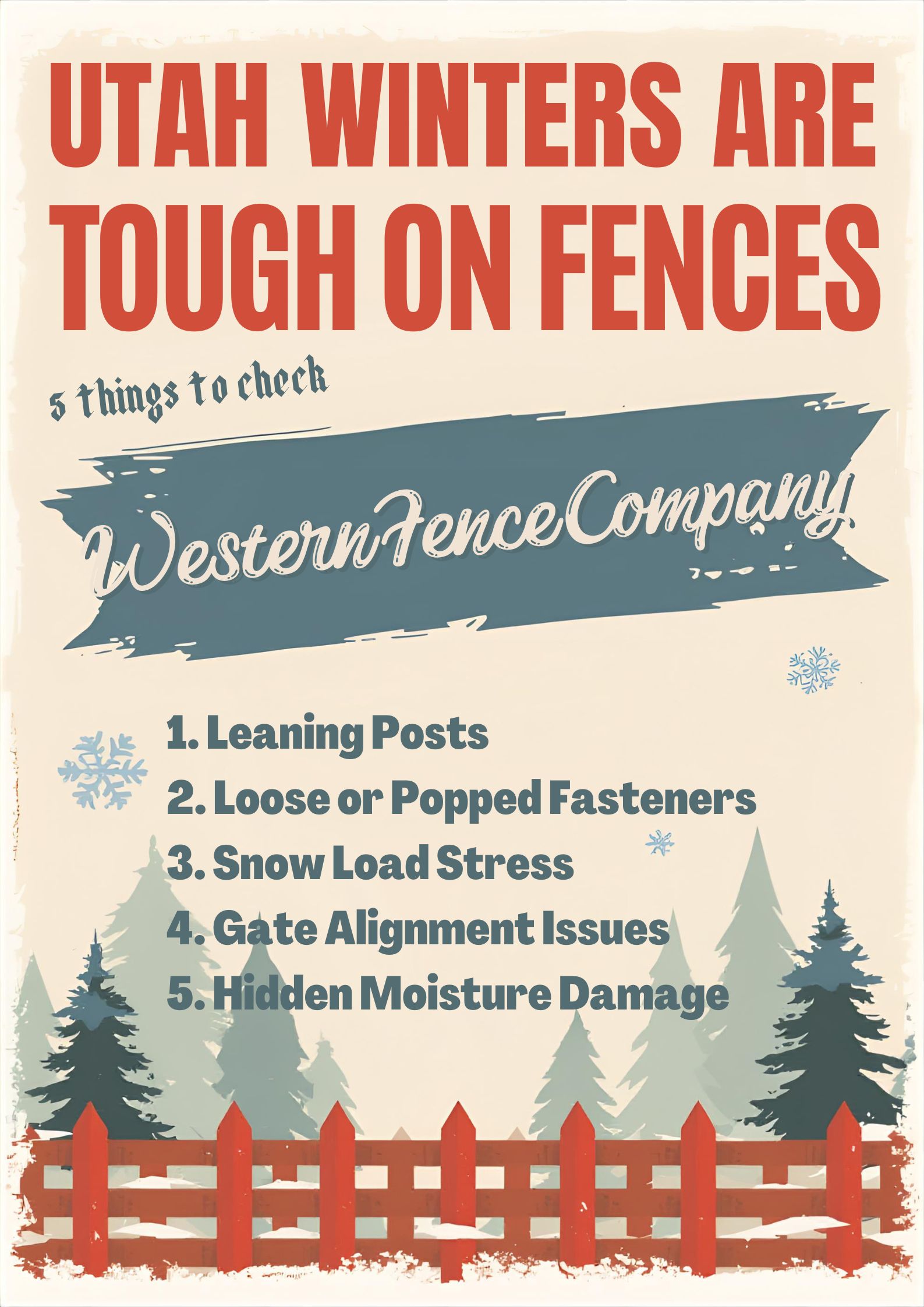
Utah winters don’t play around. Between heavy snow, freeze–thaw cycles, and strong wind gusts, fences take more stress in winter than most homeowners realize. The tricky part? A lot of damage doesn’t show up until spring.
Here are the most common winter fence issues we see across Utah—and what you can look for right now.
1. Leaning Posts
When the ground freezes and thaws repeatedly, soil shifts. If posts weren’t set deep enough or properly reinforced, they’ll start to lean—sometimes subtly, sometimes dramatically.
What to look for:
Posts that look “slightly off” now will be noticeably worse once the ground softens.
2. Loose or Popped Fasteners
Cold temperatures cause materials to contract. Over time, nails and screws can loosen, especially on wood fences.
What to look for:
Rails pulling away, boards rattling in the wind, or gaps that weren’t there in the fall.
3. Snow Load Stress
Snow sitting on fence rails adds weight that fences aren’t designed to hold long-term—especially privacy fences.
What to look for:
Sagging sections, cracked rails, or bowed panels.
4. Gate Alignment Issues
Gates are often the first thing to show winter damage because they rely on perfect alignment.
What to look for:
Gates that drag, don’t latch, or suddenly feel “heavy.”
5. Hidden Moisture Damage
Snow melts, refreezes, and seeps into wood grain. Cedar is resilient, but even cedar needs proper installation to withstand Utah winters year after year.
What to look for:
Darkened wood near the base of posts or soft spots once temperatures rise.
Most fence failures don’t happen all at once. They start in winter and show up in spring—when repairs are more expensive and schedules fill fast.
Catching small issues now can mean:
• Simple adjustments instead of full replacements
• Longer fence lifespan
• Fewer surprises when spring hits
If something looks off, it probably is.