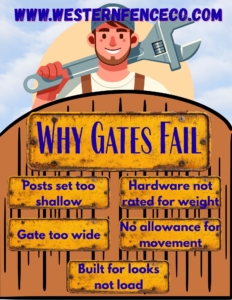
Gates are often the most used and most stressed part of any fence system. They are opened daily, exposed to weather year round, and expected to stay aligned while carrying significant weight. When a gate fails, it usually is not sudden or mysterious. It is the result of a few common mistakes made at the beginning.
Here are the real reasons gates fail and what should be done differently.
Posts Set Too Shallow
A gate is only as strong as the posts holding it. One of the most common failures we see is posts that were not set deep enough for the weight and movement of the gate.
Gate posts need to resist not just vertical load, but constant lateral force from opening, closing, wind, and ground movement. Shallow posts shift over time, which leads to sagging, dragging, and misalignment. Once a post moves, the gate follows.
Depth matters. So does proper footing size and soil consideration. This is not an area to cut corners.
Hardware Not Rated for the Weight
Heavy gates require hardware designed to carry heavy loads. Decorative hinges or light duty hardware may look good on install day, but they are not built for long term performance.
Underrated hardware wears out quickly, bends under stress, or fails altogether. Proper hinges, latches, and fasteners should be selected based on gate size, material, and frequency of use, not appearance alone.
Gate Too Wide
Wide gates are visually appealing, but width dramatically increases leverage and stress on posts and hardware. The wider the gate, the more force is applied every time it moves.
Many gate failures happen because the span was pushed too far without compensating with structural support, reinforced framing, or additional posts. Good gate design balances access needs with structural reality.
No Allowance for Movement
All materials move. Wood expands and contracts. Metal shifts with temperature. Soil heaves and settles. Gates that are built too tight with no tolerance for movement will bind, drag, or twist over time.
Allowances for seasonal movement and daily use are not flaws. They are intentional design decisions that keep gates functioning smoothly long term.
Built for Looks, Not Load
This is one of the biggest problems we see. A gate can look beautiful and still be structurally wrong.
When design prioritizes appearance over load bearing requirements, failure is only a matter of time. A properly built gate considers weight distribution, internal framing, hinge placement, and long term stress first. Aesthetics should complement structure, not replace it.
The Bottom Line
Most gate failures are not accidents. They are predictable outcomes of poor planning, improper materials, or shortcuts during installation.
A well built gate should open smoothly, stay aligned, and perform for years without constant adjustment. That only happens when it is designed and built with structure in mind from the start.
If you are investing in a custom gate, make sure it is built for load, movement, and longevity, not just the photo on install day.
Because the gates you notice most are the ones that stop working.



Spring Fence Prep in Utah: What to Fix Before It Becomes a Bigger Problem
Utah winters are hard on fences. Snow, ice, and freeze-thaw cycles can cause damage that often goes unnoticed until spring.
Western Fence Company, Utah’s oldest fencing company, recommends inspecting your fence early in the season to prevent costly repairs later.
Common Spring Fence Issues in Utah
Leaning or shifting fence posts are one of the most common issues we see after winter. Frost movement can loosen posts, especially in older fences.
Cracked or warped wood boards are also common. Moisture combined with dry heat can cause splitting and weakening if repairs are delayed.
Sagging gates and rusted hardware are another frequent issue. Gates take more wear than any other part of the fence and often need adjustment after winter.
Chain link fences may show loose tension bands or sagging fabric that should be corrected early.
Simple Spring Fence Check
Walk your fence line and look for uneven sections. Push lightly on posts. Open and close gates to check alignment. Look for loose boards, exposed fasteners, or damaged hardware.
Why Professional Fence Repairs Matter
Temporary fixes can hide bigger problems. A professional Utah fence company understands how to reinforce posts, realign gates, and extend the life of your fence.
Led by CEO Jason McLaughlan, a fourth-generation fencing professional, Western Fence Company has repaired fences across Utah for decades.
Fix Early, Save Money
Spring repairs are typically faster and more affordable than full replacements during the busy summer season.
Utah Fence Trends for 2026: What Homeowners Are Choosing Instead of Vinyl
Utah homeowners are moving away from cookie-cutter fencing and choosing options that offer strength, character, and long-term value. In 2026, fencing in Utah is about craftsmanship, customization, and materials that can truly handle the state’s climate.
At Western Fence Company, Utah’s oldest fencing company, we’ve seen these shifts happen firsthand. Led by CEO Jason McLaughlan, a fourth-generation owner, our team has installed fences across Utah long enough to know which materials stand the test of time.
Wood Fencing Leads the Way
Wood fencing remains the top choice for Utah homeowners who want both privacy and style. Pressure-treated wood, cedar, and custom-stained fences are especially popular. Horizontal slat designs and board-on-board privacy fences are trending in both new builds and established neighborhoods.
Ornamental Iron Is Back
Ornamental iron fencing is gaining popularity for front yards, pools, and decorative boundaries. Homeowners love the durability, clean lines, and timeless look. Iron fencing performs exceptionally well in Utah’s weather and adds immediate curb appeal.
Chain Link Is Getting an Upgrade
Chain link fencing continues to be a practical choice for large properties, pets, and commercial spaces. Today’s chain link options include black and coated finishes that look cleaner and last longer than traditional galvanized fencing.
Custom Fencing Is the New Standard
Utah homeowners want fences that fit their property, not mass-produced designs. Custom heights, gate styles, and material combinations are becoming the norm.
Built for Utah, Built to Last
Trends change, but proper installation doesn’t. Western Fence Company has been building fences in Utah for generations, understanding soil conditions, frost depth, wind exposure, and local regulations better than anyone.
Why Planning Your Fence Before Spring Is the Smartest Move Utah Homeowners Can Make
If you live in Utah, you already know how spring works here. One minute the snow melts, the next minute everyone in the neighborhood suddenly needs a new fence. Contractors get booked out. Lead times stretch. Prices tighten. And the phrase “I wish we had planned sooner” starts floating around backyard conversations.
At Western Fence Company, we see it every single year.
That is why winter and early spring fence planning is not just smart. It is strategic.
Fence Planning Season Is Real and It Starts Before Spring
Spring is peak fencing season in Utah. Everyone waits for the weather to turn, then everyone calls at once. Homeowners. Builders. HOAs. Property managers. All needing estimates yesterday.
Planning your fence project now means:
• Better scheduling availability
• Faster installation timelines
• Less stress when spring hits
• More flexibility in materials and design
• Your property is ready the moment the ground is ready
Fence planning before spring is how you stay ahead instead of scrambling.
Utah Fencing Is Not One Size Fits All
Utah terrain, climate, and city requirements matter more than people realize. A fence that works in one area may not be ideal in another.
At Western Fence Company, we specialize in:
• Residential fencing in Utah
• Commercial fencing in Utah
• Custom estate gates
• Wood fencing
• Vinyl fencing
• Chain link fencing
• Iron and ornamental fencing
• HOA compliant fencing solutions
We do not just install fences. We plan them properly for Utah conditions.
Why Homeowners Trust Western Fence Company
Western Fence Company has been serving Utah communities for decades. Our reputation is built on craftsmanship, transparency, and doing things right the first time.
Our CEO, Jason McLaughlan, is deeply involved in the standards and culture of the company. Quality is not a buzzword here. It is the expectation.
When you work with Western Fence Company, you are getting:
• Experienced Utah fence professionals
• Honest recommendations, not upsells
• Clear timelines
• Durable materials built for Utah weather
• A team that actually answers the phone
Custom Estate Gates and Fencing That Make a Statement
Spring is when properties come to life. That is why so many homeowners choose to upgrade or install custom estate gates and fencing ahead of the season.
Planning early allows time to design something that is both functional and beautiful. Whether it is a custom gate that elevates curb appeal or a fence that secures your property while matching your home’s style, early planning gives you options.
And options are everything.
Waiting Until Spring Can Cost You More Than Time
When fencing demand spikes, schedules fill fast. Materials can become limited. And timelines stretch.
Planning now helps you avoid:
• Long wait times
• Rushed decisions
• Limited material availability
• Missed spring installation windows
Your fence should not feel like a last-minute project. It should feel intentional.
This Is Your Sign to Reach Out Now
If a fence is even remotely on your spring to-do list, now is the time to act.
Contact Western Fence Company today to:
• Schedule a consultation
• Get on the spring installation calendar
• Explore fencing and gate options
• Work with a trusted Utah fencing company
Spring is coming whether you are ready or not. Your fence should be.
Weekly Wrap Up: Winter Fence Damage Is Not a Personality Trait
This week at Western Fence, we talked a lot about winter fence damage. Not because we love bad news, but because Utah winters are very good at slowly ruining perfectly good fences.
Snow piles up. Wind pushes hard. The ground freezes, thaws, freezes again, and your fence posts quietly start questioning their life choices. By the time most homeowners notice something is wrong, the fence is already leaning like it had a long night out.
Winter is one of the most common times we see fence damage in Utah. Heavy snow adds weight to panels and rails. Freeze thaw cycles loosen posts. Moisture sneaks into wood and sticks around long enough to cause rot, warping, and long term structural issues.
Signs Your Fence Is Losing the Battle With Winter
• Fence posts that are no longer standing straight and confident
• Panels that wobble when the wind looks at them funny
• Gates that drag, stick, or refuse to close out of spite
• Wood that feels soft, cracked, or looks a little too weathered
• Metal parts that are rusting or pulling away
If this sounds familiar, the good news is many of these issues are repairable if caught early. This week we helped homeowners across Utah fix winter related fence damage before small problems turned into full replacements.
Why Winter Fence Repairs Matter
Fence damage does not usually happen all at once. It happens slowly, quietly, and at the worst possible time. Freeze thaw cycles weaken posts underground long before the fence actually falls over.
A quick winter fence inspection can extend the life of your fence, protect your property, and save you money. Fixing a leaning post now is much easier than rebuilding an entire fence later.
Looking Ahead
As winter continues, Western Fence will keep helping homeowners stay ahead of fence damage with honest recommendations, preventative repairs, and work built for Utah weather.
If your fence is leaning, shifting, or showing signs of winter wear, it might be time to give it some attention before spring makes things worse.
Western Fence proudly provides fence repair and fence installation services across Utah. Built to last. Even in winter.
The Real Cost of Winter Damage and How to Avoid Paying It
When winter hits, fences and gates suddenly start to fail. Posts lean. Gates drag. Panels crack or warp. Most people blame snow, ice, or freezing temperatures.
The truth is winter damage is usually not caused by winter.
It is caused by shortcuts.
What Winter Really Does to a Fence
Winter brings moisture, freezing, thawing, and weight from snow. These forces test how well a fence was installed and how well it has been maintained. A fence that was built correctly can handle these conditions year after year. A fence that was rushed or installed cheaply cannot.
Frost heave is one of the biggest culprits. When moisture in the ground freezes, it expands and pushes upward. If fence posts are not set deep enough or properly anchored, they move. Once posts move, everything else follows.
Snow load can also expose weak points. Heavy snow resting on panels or gates adds stress. If boards are low quality or fasteners are poorly placed, failure is only a matter of time.
The Hidden Costs of Skipping Quality
Many winter repairs come with repeat costs. Resetting posts that were not deep enough. Replacing boards that warped because they were not rated for moisture. Fixing gates every season because alignment was never right.
These are not one time fixes. They happen again and again.
Over the life of a fence, the cost of repeated winter repairs can easily exceed the cost of doing it right the first time.
What Saves You Money Long Term
A quality install starts with proper depth and placement of posts. It uses materials that can handle moisture, freezing, and sun. It accounts for gate weight, movement, and alignment before problems start.
Maintenance also matters. A quick seasonal check can catch loose hardware, early movement, or drainage issues before they become expensive repairs. Small adjustments now prevent major fixes later.
Winter Is a Test You Can Pass
Winter does not destroy fences. It reveals whether they were built and cared for correctly.
When you invest in proper installation and simple maintenance, winter becomes just another season, not a repair bill waiting to happen.
Winter Patience and the Fence That Slowly Tests It
Winter forces homeowners to practice patience whether they want to or not. Projects get postponed. Outdoor repairs get pushed aside. And fences quietly take advantage of the season.
Unlike storm damage that happens all at once, winter fence damage is gradual. Snow accumulation adds consistent weight to rails and panels. Frozen ground restricts movement while freeze thaw cycles repeatedly expand and contract the soil. Moisture becomes trapped around posts and below the surface, creating the perfect conditions for shifting and rot.
Most of this damage happens where you cannot see it.
A fence can look stable while posts are slowly loosening underground. Gates are often the first clue. If a gate starts dragging, sticking, or swinging differently than it did before winter, it is usually a sign that the posts have shifted. Leaning sections, uneven tops, and gaps at the bottom of panels are also common early indicators.
Patience often leads homeowners to wait until spring, and that instinct makes sense. Cold weather makes repairs uncomfortable and difficult. The problem is not waiting. The problem is assuming the fence is fine simply because it is still standing.
Spring reveals what winter started.
As the ground thaws, posts that shifted during winter may not settle back into place. Water damage that began below ground becomes visible. What could have been a simple repair may now require additional labor or replacement of sections that were weakened over time.
The most effective approach is awareness. Walking your fence line after heavy snowfall or during early thaw periods can help you spot changes before they worsen. Pay attention to gates, post alignment, and any areas where water tends to collect.
A professional inspection in early spring can identify issues that are easy to miss and address them before they escalate. In many cases, reinforcing or resetting posts early can significantly extend the life of the fence.
Winter teaches patience.
Your fence teaches awareness.
Both matter if you want your fence to last.
How can I tell if winter damaged my fence?
Look for leaning posts, uneven fence lines, and gates that drag or no longer latch correctly. These are often early signs that posts shifted during freeze thaw cycles.
Is it normal for fences to lean a little after winter?
Minor movement can happen, but noticeable leaning usually means the footing or soil around the post was compromised. It rarely fixes itself without intervention.
Why do gates show problems before the rest of the fence?
Gates rely on precise alignment. Even small shifts in posts caused by frozen or expanding ground can make gates stick or sag before other damage becomes obvious.
Can winter moisture really cause rot if the fence looks fine?
Yes. Moisture often collects below ground where it cannot dry properly. Rot frequently starts at the base of posts and is not visible until it has progressed.
Should I repair fence damage in winter or wait until spring?
Emergency issues should be addressed immediately. For most damage, early spring is ideal because the ground is workable and underlying problems are easier to evaluate.
How does a spring inspection help save money?
Catching shifted posts or early rot can prevent full section replacements. Small repairs early often extend the life of the entire fence.
Winter Fence Damage in Utah Starts Below Ground
Why Fence Posts Fail After Freeze Thaw Cycles
Utah winters are tough on fences, especially the posts that hold everything together. While most homeowners focus on boards and rails, the real damage often happens underground where it is easy to miss and expensive to ignore.
From Wasatch Front snow loads to rapid spring thaws, Utah’s climate creates the perfect conditions for fence post failure. By the time visible damage appears, the structure is already compromised.
Why Utah Winters Are So Hard on Fence Posts
Fence posts depend on stable soil and solid concrete footings. Utah’s freeze thaw cycles disrupt both.
When the ground freezes, it expands and pushes against posts. When it thaws, the soil softens and shifts. Repeated cycles loosen the post, weaken the footing, and allow movement that worsens with every storm.
Moisture from melting snow seeps into the ground, further reducing stability. Add wind and snow load, and even newer fences can begin to fail after a single winter.
The Early Signs of Fence Post Damage
Most winter fence damage does not happen overnight. It builds quietly until one small issue becomes a much larger repair.
Watch for fence posts that move when pushed.
Notice any sections that lean or feel uneven.
Check gates that no longer swing or latch properly.
Look for gaps forming at the base of the fence.
These are not cosmetic issues. They are early indicators of structural failure.
Why Ignoring Fence Post Issues Costs More
Fence systems rely on each post to distribute weight evenly. When one post loosens, the surrounding posts take on additional stress. This often leads to multiple failures in a short period of time.
What could have been a single fence post repair in early spring often turns into a full section replacement by summer. This is especially common in Utah, where soil conditions change quickly as temperatures rise.
Addressing damage early helps preserve the rest of the fence and avoids unnecessary replacement costs.
How Often Should Fence Posts Be Checked in Utah
More than once.
Fence posts should be inspected at the end of winter, again during spring thaw, and after heavy snow or rapid temperature changes. Utah’s weather patterns make a single inspection insufficient.
If a fence moves when pressure is applied, the post should be evaluated before the damage spreads.
Protecting Your Fence Investment
A well built fence is an investment in your property’s function, privacy, and value. Protecting that investment means paying attention to what is happening below the surface.
Winter damage does not fix itself. The sooner it is identified, the easier and more affordable the solution.
If you suspect your fence may have shifted over winter, a professional inspection can determine whether a repair is needed or if preventative reinforcement can extend the life of the fence.
Utah Winters Are Hard on Fences — Here’s What to Check Right Now
Utah winters don’t play around. Between heavy snow, freeze–thaw cycles, and strong wind gusts, fences take more stress in winter than most homeowners realize. The tricky part? A lot of damage doesn’t show up until spring.
Here are the most common winter fence issues we see across Utah—and what you can look for right now.
1. Leaning Posts
When the ground freezes and thaws repeatedly, soil shifts. If posts weren’t set deep enough or properly reinforced, they’ll start to lean—sometimes subtly, sometimes dramatically.
What to look for:
Posts that look “slightly off” now will be noticeably worse once the ground softens.
2. Loose or Popped Fasteners
Cold temperatures cause materials to contract. Over time, nails and screws can loosen, especially on wood fences.
What to look for:
Rails pulling away, boards rattling in the wind, or gaps that weren’t there in the fall.
3. Snow Load Stress
Snow sitting on fence rails adds weight that fences aren’t designed to hold long-term—especially privacy fences.
What to look for:
Sagging sections, cracked rails, or bowed panels.
4. Gate Alignment Issues
Gates are often the first thing to show winter damage because they rely on perfect alignment.
What to look for:
Gates that drag, don’t latch, or suddenly feel “heavy.”
5. Hidden Moisture Damage
Snow melts, refreezes, and seeps into wood grain. Cedar is resilient, but even cedar needs proper installation to withstand Utah winters year after year.
What to look for:
Darkened wood near the base of posts or soft spots once temperatures rise.
Most fence failures don’t happen all at once. They start in winter and show up in spring—when repairs are more expensive and schedules fill fast.
Catching small issues now can mean:
• Simple adjustments instead of full replacements
• Longer fence lifespan
• Fewer surprises when spring hits
If something looks off, it probably is.
Why Gates Fail (And How to Make Sure Yours Doesn’t)
Gates are often the most used and most stressed part of any fence system. They are opened daily, exposed to weather year round, and expected to stay aligned while carrying significant weight. When a gate fails, it usually is not sudden or mysterious. It is the result of a few common mistakes made at the beginning.
Here are the real reasons gates fail and what should be done differently.
Posts Set Too Shallow
A gate is only as strong as the posts holding it. One of the most common failures we see is posts that were not set deep enough for the weight and movement of the gate.
Gate posts need to resist not just vertical load, but constant lateral force from opening, closing, wind, and ground movement. Shallow posts shift over time, which leads to sagging, dragging, and misalignment. Once a post moves, the gate follows.
Depth matters. So does proper footing size and soil consideration. This is not an area to cut corners.
Hardware Not Rated for the Weight
Heavy gates require hardware designed to carry heavy loads. Decorative hinges or light duty hardware may look good on install day, but they are not built for long term performance.
Underrated hardware wears out quickly, bends under stress, or fails altogether. Proper hinges, latches, and fasteners should be selected based on gate size, material, and frequency of use, not appearance alone.
Gate Too Wide
Wide gates are visually appealing, but width dramatically increases leverage and stress on posts and hardware. The wider the gate, the more force is applied every time it moves.
Many gate failures happen because the span was pushed too far without compensating with structural support, reinforced framing, or additional posts. Good gate design balances access needs with structural reality.
No Allowance for Movement
All materials move. Wood expands and contracts. Metal shifts with temperature. Soil heaves and settles. Gates that are built too tight with no tolerance for movement will bind, drag, or twist over time.
Allowances for seasonal movement and daily use are not flaws. They are intentional design decisions that keep gates functioning smoothly long term.
Built for Looks, Not Load
This is one of the biggest problems we see. A gate can look beautiful and still be structurally wrong.
When design prioritizes appearance over load bearing requirements, failure is only a matter of time. A properly built gate considers weight distribution, internal framing, hinge placement, and long term stress first. Aesthetics should complement structure, not replace it.
The Bottom Line
Most gate failures are not accidents. They are predictable outcomes of poor planning, improper materials, or shortcuts during installation.
A well built gate should open smoothly, stay aligned, and perform for years without constant adjustment. That only happens when it is designed and built with structure in mind from the start.
If you are investing in a custom gate, make sure it is built for load, movement, and longevity, not just the photo on install day.
Because the gates you notice most are the ones that stop working.
What Custom Fence Fabrication Really Means (And Why It Matters)
When most people think about a fence, they picture the finished product — the clean lines, the solid gate, the way it frames a home or property. What often gets overlooked is how that fence is made, and why custom fabrication makes such a difference.
At Western Fence, fabrication isn’t an afterthought. It’s where every project truly begins.
Not All Fences Are Created Equal
Pre-manufactured fencing has its place, but it comes with limitations. Fixed sizes, limited styles, and little flexibility when it comes to unique properties or design goals.
Custom fabrication allows us to:
• Build to exact measurements, not “close enough”
• Match architectural details of a home or remodel
• Create gates, railings, and fences that work with slopes, grades, and challenging layouts
• Control quality at every step, from raw material to final install
Simply put, it allows us to build what actually fits — both functionally and visually.
Inside the Fabrication Shop
Our fabrication shop is where raw steel, aluminum, and materials are transformed into finished pieces. This is where ideas become physical, measurements matter, and details get the attention they deserve.
Every weld, cut, and finish is done with a purpose. Custom doesn’t mean complicated — it means intentional. When something is built in-house, we can adjust, refine, and perfect it before it ever reaches your property.
Why Clients Choose Custom
Homeowners, builders, and designers choose custom fabrication because it delivers:
• Stronger, longer-lasting structures
• Cleaner lines and better fit
• Unique designs that can’t be bought off a shelf
• Confidence that the fence was built specifically for their project
It’s not about being flashy. It’s about building something that works, lasts, and looks right for years to come.
Built on Trust
Every fence we fabricate represents trust — trust that we’ll build it correctly, install it cleanly, and stand behind it. That responsibility is something we take seriously.
From residential properties to larger construction projects, Western Fence approaches every job with the same mindset: build it right the first time.
The Bottom Line
A fence is more than a boundary. It’s part of how a property functions, looks, and feels. Custom fabrication ensures it’s done intentionally, not generically.
At Western Fence, we don’t just install fences — we build them.